Subject
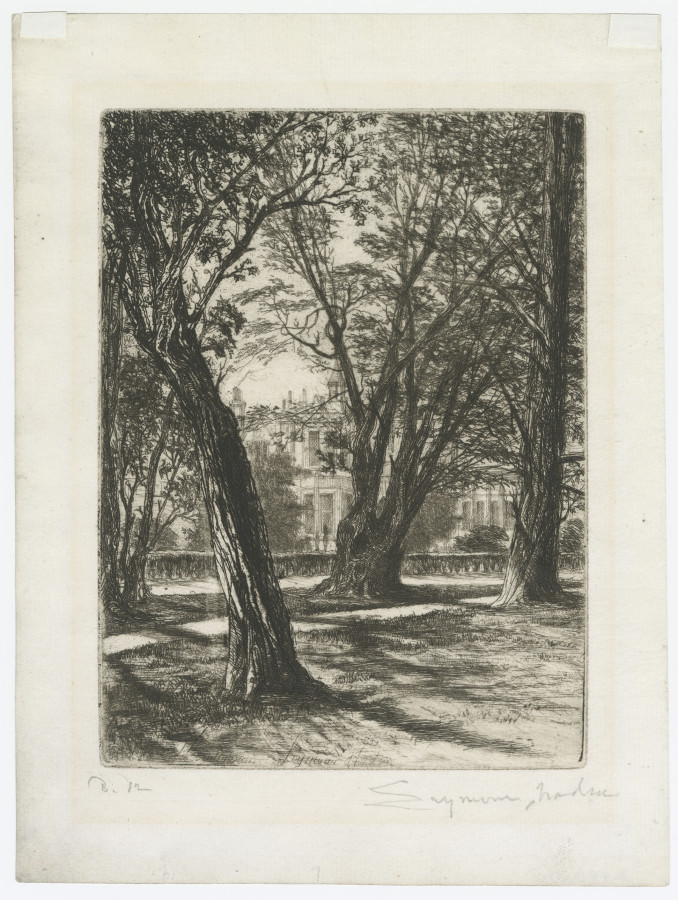
The view of the garden front of No.13 Kensington Palace Gardens, generally known as Lord Harrington's House because of its ‘unlucky' number thirteen, seen from the tree-lined walk at the western edge of Kensington Gardens. To the right, the ballroom of the much larger house next door can be glimpsed. (Harrington House is currently the official residence of the Russian ambassador in London).
This view and it's later ‘pendant’ pairing (SO 0036) describe the park around Kensington Palace by appropriating the planar effect of stereoscopic photography. Boldly isolated trunks compel the viewer to gauge distance and draws their attention to the aerial recession created by selective inking of the plate. The print was made within the same year that Haden brought Auguste Delâtre from Paris to his home at 62 Sloane Street to help develop his brother-in-law Whistler's etchings into a marketable folio; Douze eaux-fortes d'après nature (Twelve Etchings from Nature). The distinctive ‘stereoscopic’ effect in both these etchings is a collaborative statement: Haden and Delâtre together explored the assimilation of new visual models into existing assumptions about depiction, in this case within the Enlightenment tradition of picturing aristocratic houses and parks.