Subject
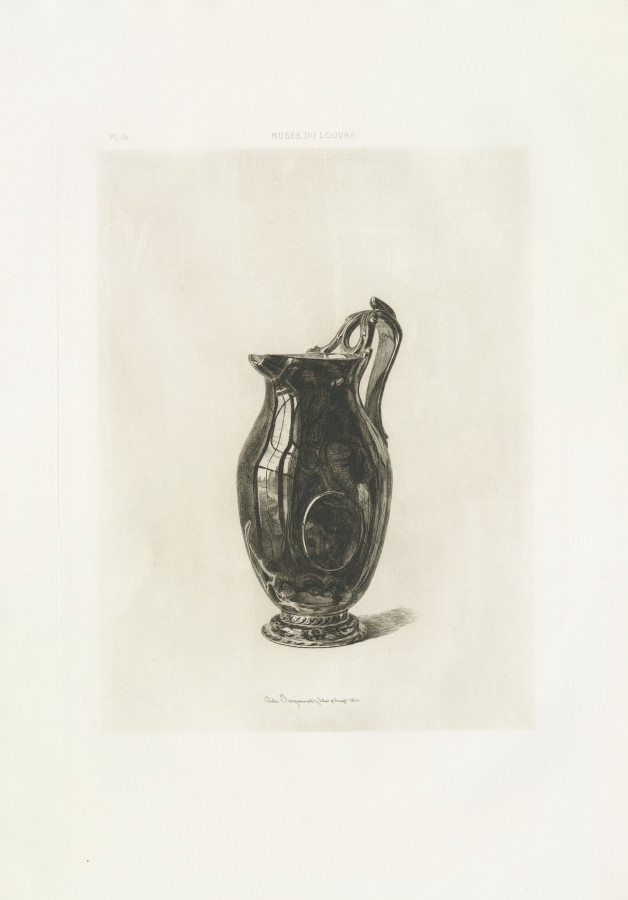
In 1864 Jules Jacquemart was commissioned to produce thirty etched illustrations of French royal treasures in the collections of the Musées impériaux. The project was overseen by the state printer located within the Louvre, the Chalcographie des musées impériaux. The Chalcographie had responsibility for disseminating print images of exceptional objects in French national collections and maintained a catalogue of reproductive engravings of state-owned paintings as professional references and for sale to the public. Their inventory included not only engravings of the Louvre's ‘old masters’ but also reproductions of contemporary works, including those by Ingres, Delacroix and Moreau.
Les gemmes et joyaux de la couronne displayed Jacquemart's exceptional ability to describe the appearance of objects made from precious materials in etching; gold, silver and ivory, polished stones, rock crystal vessels and jewellery. His clear-sighted attention to materiality was consistent with current thinking in design theory which emphasised the foundational role of materials and processes in the development of culture.
The object itself is a Roman ewer carved from a block of translucent brown and blue-veined sardonyx. At some point in the past the jug had lost its original, sardonyx foot; by the seventeenth century this was replaced by a silver-gilt mount decorated with black enamel scrolls. The ewer entered the French Royal collection during the reign of king Louis XIV.